
Thomas Hill (1829-1908)
Archives
-

Not Available
Biography
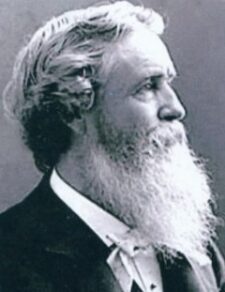 Thomas Hill was a celebrated 19th-century American landscape painter, best known for his majestic views of the American West, particularly Yosemite Valley and the Sierra Nevada Mountains. His paintings not only captured the grandeur of the American wilderness but also helped shape the romantic vision of the West during a pivotal period in U.S. history.
Early Life and Education
Born in Birmingham, England, on September 11, 1829, at the age of fifteen Hill immigrated with his family to the United States in 1844, settling in Taunton, Massachusetts. Hill had a younger brother, Edward Hill (1843-1923) who also became a landscape painter. Thomas Hill began his art career working as a carriage painter. More than simply manual labor, carriage painting required skills with preparing the surface and applying layers of high-quality oil-based paints to achieve a deep and lustrous finish. With high-end custom work, painters were often expected to embellish with fine gold leaf or enamel designs. Hill showed early artistic promise and soon moved to Philadelphia to further his education. There, he enrolled at the Pennsylvania Academy of the Fine Arts, the oldest art school and museum in the United States.
While at the Pennsylvania Academy of the Fine Arts, Hill studied under influential instructors such as Peter Frederick Rothermel (1812–1895), a respected painter renowned for his large-scale historical and religious compositions. At the time, Hill initially aspired to become a history painter himself, following the academic tradition of grand narrative painting.
Later, while working in Massachusetts and New Hampshire, Hill developed close friendships with leading American landscape and naturalist painters. He painted alongside George Inness (1825–1894), known for his poetic tonal landscapes; Virgil Williams (1830–1886), a classically trained artist and future co-founder of the San Francisco School of Design; and Albert Bierstadt (1830–1902), whose sweeping vistas of the American West brought international acclaim. Hill also worked with his younger brother, Edward Hill, a fellow landscape painter active in New England and the White Mountains.
Marriage
In 1851, Thomas Hill married Charlotte Elizabeth Hawkins (also recorded as Hawkes), likely in Boston, Massachusetts, where Hill had settled after immigrating to the United States. Charlotte, born in 1831, was of English descent and supported Hill during the early years of his career as he transitioned from carriage painting to fine art. The couple had nine children, though the family endured hardship with the loss of twin infants. Their daughter, Anne Mary “Nancy” Hill, born in 1860, would go on to play a significant role in American art history as the mother of Norman Rockwell (1894–1978), the celebrated 20th-century artist known for his iconic depictions of American life and captivating covers for Saturday Evening Post.
Hill’s frequent absences due to extended painting trips, especially to Yosemite and the American West, as well as the financial strain of supporting a large family, placed increasing pressure on the marriage. By the early 1880s, the couple had separated, though they never formally divorced. Charlotte and the children remained in the East, while Thomas relocated permanently to California, where he continued to develop his artistic career. Their separation, while amicable, as evidenced in later correspondence, marked a turning point in Hill’s personal life. Freed from domestic responsibilities, he was able to focus more intensely on his work in the Sierra and establish his studio in Wawona, deepening his connection to the Yosemite landscape that would define his legacy. Meanwhile, Charlotte remained an influential figure in the upbringing of their children, including Nancy, whose own son, Norman, would later cite his mother’s artistic sensibility and encouragement as key to his development.
European Influence
In the early 1860s, Hill traveled to Europe to further develop his artistic skills. He spent time in France, where he became acquainted with the Barbizon School, a group of landscape painters who emphasized naturalism, mood, and direct observation of nature. Their plein air approach deeply influenced Hill’s handling of atmosphere and light.
During this time, Hill also came under the influence of Paul Meyerheim (1842–1915), a German painter and illustrator known for his romantic realism and his detailed depictions of animals and landscapes. While Meyerheim was younger than Hill, his work reflected the European romantic tradition that emphasized harmony between man and nature—a theme that resonated with Hill’s own evolving sensibilities.
Western Expeditions and Artistic Focus
Upon returning to the United States, Hill became increasingly captivated by the American West, a region newly accessible and ripe for exploration and artistic interpretation in the post-Civil War era. In 1865, he embarked on his first journey to Yosemite Valley, accompanying a photography expedition led by the renowned photographer Carleton Watkins. The awe-inspiring landscape left a lasting impression, and Yosemite would become a central and enduring subject in Hill’s body of work.
Over time, Hill earned acclaim for his epic panoramic landscapes, rendered with a striking combination of grandeur, atmospheric clarity, and a spiritual reverence for nature. While Yosemite remained a focal point, he also captured the dramatic vistas of the Sierra Nevada, Grand Canyon, Yellowstone, and other iconic regions of the American frontier. His sweeping compositions often include diminutive figures—Native Americans, pioneers, or tourists—placed deliberately to underscore the overwhelming scale and sublime power of the natural world.
Major Works and Recognition
One of Hill’s most celebrated and historically significant works is The Last Spike (1881), a monumental painting commemorating the completion of the First Transcontinental Railroad at Promontory Summit, Utah, on May 10, 1869. This sweeping canvas masterfully blends Hill’s command of panoramic landscape with detailed historical narrative, capturing a pivotal moment in the nation’s westward expansion. The composition features more than 70 meticulously rendered portraits, including influential figures such as Leland Stanford, Collis P. Huntington, Charles Crocker, and Mark Hopkins—collectively known as the “Big Four” of the Central Pacific Railroad—as well as Grenville Dodge, chief engineer of the Union Pacific. By incorporating political and industrial leaders alongside surveyors, laborers, and military officials, Hill elevated the painting beyond documentation, creating a symbolic tribute to American progress and post-Civil War national unity.
The Last Spike was acquired by Leland Stanford, one of the principal subjects of the painting and former Governor of California. He later installed the work at the museum at Leland Stanford Junior University (now Stanford University), which he founded in memory of his son. Today, the painting remains in the university’s collection and is housed at the Cantor Arts Center, where it stands as a lasting visual testament to one of the most transformative accomplishments of 19th-century America.
Leadership and Late-Career Travels
In 1886, following the passing of his long-time friend and fellow artist Virgil Williams, Hill assumed the role of director of the California School of Fine Arts (now the San Francisco Art Institute), stepping in without compensation. However, by the following summer, the administrative responsibilities proved overwhelming, and Hill began seeking relief from the pressures of academic leadership and a return to creative exploration.
That opportunity came through his friend, the renowned naturalist John Muir (1838-1914), who commissioned Hill to paint Muir Glacier in Glacier Bay, Alaska. Hill resigned from the School of Fine Arts in the summer of 1887 and embarked on a journey to Alaska, producing a striking series of paintings depicting the Alaskan and Canadian coastlines.
While Muir was generally partial to the work of his close friend and prominent California Landscape artist William Keith (1838-1911), he chose Hill for the project, presumably for Hill’s particular ability to interpret ice. Hill’s aesthetics, rooted in the traditions of the Hudson River School, also aligned with Muir’s Romantic sensibility, which viewed nature as both sublime and spiritually restorative. Hill’s painting of Muir Glacier is distinguished by its dramatic portrayal of nature’s immensity. The delicate canoe and diminutive figures in the foreground are contrasted by the towering glacial spires, while a steamship in the distance suggests the region’s growing appeal as a destination for exploration and tourism.
Hill’s Studios
Thomas Hill’s extraordinary ability to depict landscapes with a sense of awe and reverence was ideally suited to the grandeur of Yosemite. While he maintained a primary studio in San Francisco, in 1883 he constructed a second studio in Wawona, near the Wawona Hotel at the southern entrance to what is now Yosemite National Park. This rustic studio became a destination for travelers, dignitaries, and art patrons eager to observe the artist at work amid the splendor of the High Sierra.
Among the dignitaries who visited Hill’s Wawona studio was President Theodore “Teddy” Roosevelt who toured the studio during his May 1903 visit to Yosemite and Wawona. A National Park Service photograph captures President Roosevelt greeting Hill's family at the studio porch, underscoring Hill’s standing in conservation and art circles.
Remarkably, Hill was one of the few artists ever granted permission to build a studio within the boundaries of Yosemite—a privilege that reflected both his stature and his deep artistic and personal connection to the region. The building still stands today as a preserved landmark and remains one of the rare surviving examples of a 19th-century artist’s studio located within a U.S. national park.
Hill’s Yosemite paintings, created both en plein air and in the studio, became especially sought after by wealthy collectors and institutions, who saw in them more than just landscapes. These works were regarded as stirring visual expressions of American ideals—national identity, westward expansion, and the sublime beauty of the untamed wilderness. Through these iconic scenes, Hill played a vital role in shaping the legend and legacy of the American West and in establishing Yosemite as a symbol of the nation's natural and cultural heritage.
Final Years and Contribution to American Landscape Painting
In 1896, Thomas Hill suffered the first in a series of strokes from which he never fully recovered. He passed away on June 30, 1908 in Raymond, California. According to newspaper reports at the time, such as the Fresno Republican and Los Angeles Times, Hill was found near the railroad tracks close to his residence in Raymond, leading to the presumption that he had taken his own life.
Hill left behind a profound artistic legacy. His landscapes of the American West are preserved in major public collections, including the Smithsonian American Art Museum, the White House Collection, the Crocker Art Museum in Sacramento, and the de Young Museum in San Francisco.
Thomas Hill is remembered as a pivotal figure in the western extension of the Hudson River School and a defining voice in shaping the visual legacy of 19th-century American landscape painting. With a masterful command of light, atmosphere, and scale, he elevated the genre beyond mere topographical representation, infusing his canvases with a sense of national pride and spiritual reverence. His works endure not only as artistic achievements, but as timeless reflections of a nation discovering its identity through the majesty of its natural world.
Elaine Adams
Director, American Legacy Fine Arts
Thomas Hill’s Professional Memberships
Atheneum Art Club (Boston)
Bohemian Club
Boston Art Club
San Francisco Art Association (founding member)
Hill’s Public Collections Include
Several large-scale Yosemite paintings by Thomas Hill are included in the collections of:
De Young Museum (Fine Arts Museums of San Francisco) in San Francisco; Crocker Art Museum in Sacramento, CA; Haggin Museum in Stockton, CA; and the Smithsonian American Art Museum in Washington, D.C.
Additional museums that hold and/or exhibit landscape paintings by Thomas Hill include:
Anchorage Museum, Anchorage, Alaska; Cantor Arts Center, Stanford University, Stanford, California; Oakland Museum of California, Oakland, California; Los Angeles County Museum of Art, Los Angeles, California; Brigham Young University Museum of Art, Provo, Utah; Gilcrease Museum, Tulsa, Oklahoma; Terra Foundation for American Art, Chicago, Illinois; New York Historical Society, New York City, New York; The White House, Washington, D.C., and The Metropolitan Museum of Art, New York City, New York.
Research Sources:
Edan Hughes, Artists in California, 1786-1940; Peter Hassrick, Drawn to Yellowstone; Smithsonian American Art Museum; AskART; Encyclopedia Britannica, The Grove Dictionary of Art / Oxford Art Online; Autry Museum of the American West past exhibition listings; De Young Museum / Fine Arts Museums of San Francisco; Cantor Arts Center, Stanford University Archives; Yosemite National Park Archives & Library; Anchorage Museum archives; Wawona Hotel Historic District (National Register of Historic Places); Family and Genealogy from Norman Rockwell Museum; Find A Grave (Thomas Hill, Charlotte Elizabeth Hawkins Hill, and Edward Hill); U.S. Census and immigration records (1844 Hill Family arrival; family tree information).