
Martella Cone Lane (1875-1962)
Archives

Biography
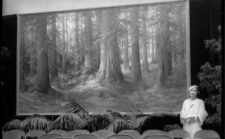 Martella Cone Lane (1875-1962) was an American painter known for her portraits, still lifes, and particularly her depictions of redwood trees in California. She was born in Albia, Iowa, and later moved to California, where she taught art and became recognized for her contributions to the art community, especially in preserving the redwoods
From Albia, Iowa, Martella Cone Lane became a painter especially noted for the redwood trees of northern California. She was the youngest of five children in a family supported by a father who was a minister. In 1890, when she was fifteen, her family moved to Hollister, California, but she remained in the Midwest to attend Cotner College in Lincoln, Nebraska. In 1895, she had earned a diploma in art, and in 1931, the College bestowed an honorary Doctor of Fine Arts Degree upon her. She studied briefly at Drake University in Des Moines and then went to northern California where she married George Robert Lane in 1899. The couple moved to Fortuna, and she taught art privately and at Fortuna Union High School. In 1927, she went to southern California where she taught art at Chapman College and also taught adult classes. Her early paintings were portraits, animals and still life, but in 1908, after taking a break from her painting to raise four children, she again took up her brushes and this time turned to the redwood trees for her subjects. Shortly after that recognition came including in 1912, when she won an award at the California State Fair and when the Kanst Gallery in Los Angeles began a long-term association. In 1915, representatives of Humboldt County, submitted Cone's painting, Monarch of the Forest, owned by the county, to the Panama Pacific Exposition. Also, a well-known calendar publisher, the Thomas D. Murphy of Red Oak, Iowa, commissioned redwood paintings from Lane. By 1920, her name was prominently linked to the 'big trees', and she, realizing they were in jeopardy of being destroyed, began years of service with the Save the Redwoods League. She traveled widely to speak to groups, and in 1923, as recognition for her good service, the State Forestry Service gave her land for a studio among the redwoods. In 1927, Lane moved to Southern California and continued to paint trees but also did many seascape easel paintings and did murals. She traveled to surrounding states including Arizona, Colorado and Utah, where the Church of Jesus Christ of Latter-Day Saints in Salt Lake City has one of her paintings. In the early 1950s, she lived in Whittier and quit painting because of a stroke. She died there in 1962. Eureka, California, in redwood country, has paintings by Martella Cone in the Carnegie Library and Clarke Memorial Library.
Biography Source: Phil Kovinick and Marian Yoshiki Kovinick, An Encyclopedia of Women Artists of the American West.
Martella Cone Lane (875-1962)
Early Life
Birth: 1875 in Albia, Iowa
Family: Youngest of five children; father was a minister
Education: Attended Cotner College in Lincoln, Nebraska, earning a diploma in art in 1895
Career
Marriage: Married George Robert Lane in 1899
Teaching: Taught art privately and at Fortuna Union High School in California
Art Style: Initially focused on portraits, animals, and still life; later became known for her paintings of redwood trees
Achievements
Recognition: Gained acclaim for her work in the early 1900s, winning awards at the California State Fair
Advocacy: Actively involved in the Save the Redwoods League, promoting conservation of redwood forests
Later Life: Moved to Southern California in 1927, continued painting and teaching until health issues in the 1950s
Death
Passing: Died in 1962 in Whittier, California
Legacy: Her works are held in various collections, including libraries in Eureka, California.
Exhibitions:
California State Fair, 1912 (prize); Kanst Gallery (LA), 1912 (solo); Panama Pacific Exposition, 1915; Calif. Pacific Intl Expo, 1916.
Collections:
Eureka (CA) High School; First Christian Church (Fortuna); Clarke Museum (Eureka); General Hospital (LA). American Art Annual, 1925; California State Library